5 min read
Why Local Authorities Are Moving to Cloud
Now, Not Later

Tanya Corsie
CEO

Stephen Wanless
CCO

Phil Coleman
Chief Information Officer

Zak Chester
Chief Product Officer
Across local government, legal services are under growing pressure, not because teams are underperforming, but because the environment around them has changed.
Legal departments are now expected to manage increasing volumes of work, tighter scrutiny, and more complex collaboration, often with fewer resources and less tolerance for risk. At the same time, ways of working have shifted permanently. Hybrid and remote access are no longer exceptions; they are standard.
Against this backdrop, many local authorities are reassessing how well their existing systems support the realities of modern legal services and whether standing still is still the safest option.
A Changed Operating Environment for Legal Services
Over the past few years, several external pressures have converged:

Regulatory and audit scrutiny has increased, with greater expectations around transparency, FOI responsiveness, audit trails, and data governance.

Hybrid working is now embedded, exposing the limitations of systems designed primarily for on-premise or desktop use.

Visibility and accountability matter more, particularly around case status, workloads, time recording, and service demand.

Fragmented tools are harder to justify, as reliance on inboxes, shared drives, and spreadsheets quietly increases risk.
None of these pressures are unique to any one authority. They are structural changes affecting legal teams across the public sector.
As a result, the question many teams are now asking is not “Should we modernise?” but “How long can we reasonably defer it?”
Why Waiting Is No Longer a Neutral Choice
Historically, delaying system change has often felt sensible, avoiding disruption, preserving familiarity, and deferring investment.
But in today’s environment, delay is no longer neutral. Over time, legacy arrangements tend to introduce hidden operational risk:
Manual workarounds become embedded
Visibility across cases and time becomes harder to maintain
Audit and compliance assurance rely increasingly on individual effort rather than system support
Justifying continued investment in ageing technology becomes more difficult
None of this creates immediate failure. Instead, risk accumulates quietly, until pressure increases, scrutiny intensifies, or change is forced rather than planned.
For many authorities, this has shifted the conversation. The question is no longer whether change will be needed, but when it is best to understand the options and plan on their own terms.
A Changing Technology Landscape
Alongside operational pressures, the wider technology landscape is also evolving.
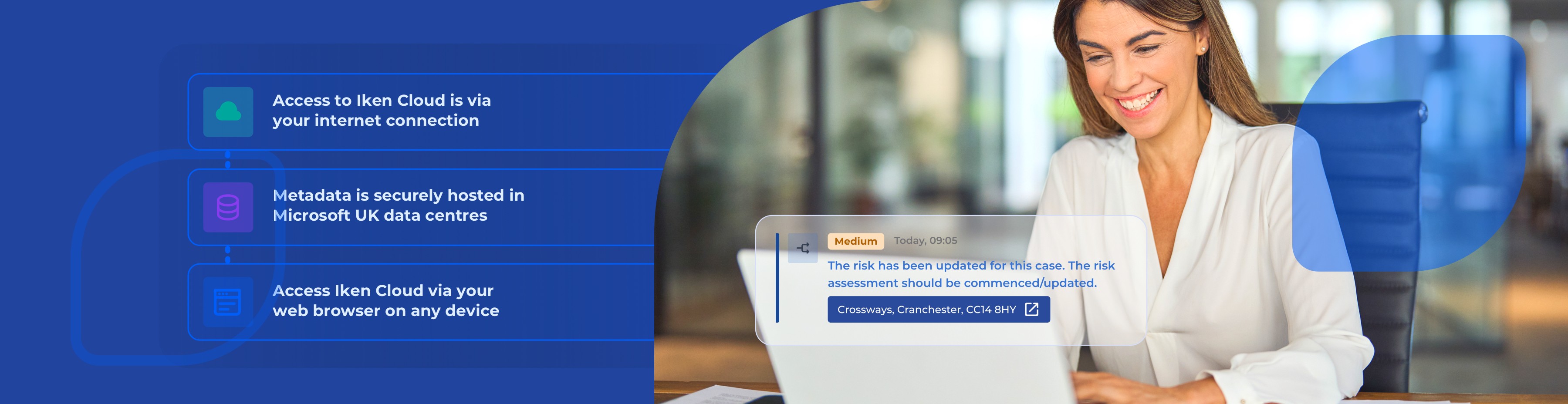
Across local government, desktop-dependent systems are gradually giving way to browser-based and cloud-delivered models. This shift is being driven in part by changes in the wider software ecosystem, including Microsoft’s move away from legacy desktop applications toward web-based working.
For legal teams, this does not create immediate pressure… but it does affect long-term planning. Systems that rely heavily on desktop integrations are approaching defined end-of-life timelines over the coming years, reducing the viability of indefinite delay.
Many authorities are therefore choosing to factor this context into their planning now, rather than wait until options become more constrained.
What “Moving Now” Actually Looks Like
Importantly, engaging with cloud-based case management does not mean committing to an immediate or disruptive change.
For most legal teams, “moving now” simply means:
Gaining clarity on what modern systems support

Understanding realistic timelines and dependencies

Exploring how migration is typically phased and supported

Identifying when, not whether a transition might make sense
Modernisation is usually incremental. Co-existence periods, structured migration plans, and supported onboarding are now the norm. Technical detail comes later, once timing and readiness are understood.
This early stage is about reducing uncertainty, not accelerating decisions.

A Low-Pressure Next Step
For teams that want to understand what this shift could mean in practice, a simple starting point is often the most effective.
A short, 15-minute orientation conversation can help clarify:
What cloud-based case management typically involves
How other authorities approach timing and migration
What options exist, without committing to any path