19th February 2026
11 min read
An in-depth perspective on integration across the case management ecosystem.

Zak Chester
Chief Product Officer
At Iken, our product’s remit is to provide a system for managing cases. As such, a modern case management system must support the entire lifecycle of a case: from receipt of instruction and case inception, through active case handling, to completion, closure, and beyond.
Alongside this, it must also support business and operational decision-making, including understanding service quality, monitoring workloads, and enabling informed decisions about resourcing and priorities.
We believe Iken delivers against this remit, and our roadmap is shaped by customer-driven enhancements, refinements, and features that continue to strengthen that delivery. Our clients range from our public sector foundations in in-house legal teams within Local Government and the Police, through to in-house teams in the private sector, as well as HR, complaints, FOI, and governance teams. Like many of our customers, we also use Iken internally to support elements of our own business administration and service delivery.
From our perspective, case management is a framework with Iken acting as a central component within a broader ecosystem of applications that organisations rely on to operate effectively. Providing integrations extends this capability beyond our own product, making it as useful in a legal setting as it is in the operations of our own business.
The benefits of integrations are not new, and their importance continues to increase, from stronger data governance and a single source of truth, to productivity gains through single entry, operational insight, and improved decision-making.
That framing naturally raises an important question: how should a case management system connect with the wider set of generalist and specialist tools that individuals, teams, departments, and organisations depend on every day?
A Philosophy of Integration: Build or Connect?
Our philosophy for integrations reflects a challenge faced by all modern software providers: build, or integrate?
Deciding where to integrate rather than build is as much about expertise as it is economics, and long-term focus.
The shift to SaaS over the last two decades has strengthened the case for integration over building. Rather than diluting focus or recreating specialist capabilities, software providers can concentrate on their core strengths while integrating with applications that already excel in complementary areas. Done well, this increases value for customers and supports sustainable product growth.
However, technology alone is not the full story. For integrations that are central to how a product operates (particularly those embedded within workflows) cultural alignment matters as much as technical capability.
As we specialise in case management, we prefer to work with best-of-breed partners whose technology and values complement our own.
What is considered core to case management is driven by the users of our product, as well as shifts in the industry and technological innovation.
With that philosophy in mind, we group integrations into three practical categories, acknowledging that in reality they often overlap: connecting people, connecting data, and connecting tools.

Connecting People
Communication and Collaboration Integrations
Service-based work is fundamentally about working with people. Enabling clear, reliable communication and collaboration is therefore foundational to effective case management.
Communication
Whilst views may differ, email remains one of the primary methods of on-the-record communication. This is as true for internal exchanges as it is for external correspondence. For case management, this means email cannot sit outside the system, it must be connected to it.
That is why robust integration with Outlook and Gmail remains a core focus for us. Improving how these integrations work (making them simpler, faster, and more reliable) is a consistent feature of our product development discussions.
We approach this from a cloud-native perspective. By integrating at the email server level rather than relying on email clients, we avoid dependencies on legacy software and future-proof how communication is captured and managed within the case record.
Our integrations treat the mail server as the source of truth for message content and metadata, retrieving data server-side to ensure consistency, auditability, and alignment with the mailbox state. By passing identifiers from the client to our servers and retrieving message data directly from the mail server, we minimise content transmitted from the client and ensure we process the same mailbox state held by the server. This approach provides the most consistent and auditable downstream processing.
Collaboration
Beyond email, collaboration on case work spans meetings, shared documents, and team workspaces. Whilst this is not an exhaustive list, it is illustrative of how distributed modern case work has become.
A synchronised set of systems reduces information fragmentation, increases accountability, and supports more efficient collaboration. For example, collaborating on case artefacts through tools such as SharePoint can simplify drafting, provided clear co-authoring conventions are agreed. This avoids passing documents back and forth between colleagues, reduces version management challenges, and enables a more centralised approach to collaboration.
This does not eliminate the need for point-in-time document capture, but it does provide a more structured and, in many cases, more efficient way of working.
Whilst Microsoft’s improving interoperability makes its suite a convenient example, this is not limited to a single vendor. Providing the necessary tools to integrate systems both within and beyond productivity suites expands interoperability across the case management ecosystem.

Connecting Data
Core Business and Insight Integrations
Connecting data within case management has two closely related dimensions: connecting the data itself, and providing access to it.
Connecting Case Data
Case data underpins almost every output produced during a case. Connecting that data directly into case materials ensures information is consistently drawn from a single source of truth, reducing the risk of errors introduced through duplication or manual re-keying.
This improves reliability and trust in case outputs while also supporting productivity by reducing duplicated keystrokes and cross-referencing, often an underestimated drain on time and cognitive bandwidth.
Where producing new case artefacts is concerned, standardised yet dynamic templates remain an essential case management function. The methods of moving from requirement to client-ready document continue to evolve, particularly as AI tools and their specialised use cases develop. Regardless of production method, enabling templates to access case data ensures faster and more accurate output.
Document collation and bundling tools provide a further example, and illustrate the overlap between these integration categories. Ensuring that specialist tools retrieve documents and metadata directly from source systems supports greater consistency. Metadata such as document creation dates or email timestamps are often critical in bundled outputs. Whilst amendable or derivable, using source data is both more efficient and more accurate.
Providing Access to Data
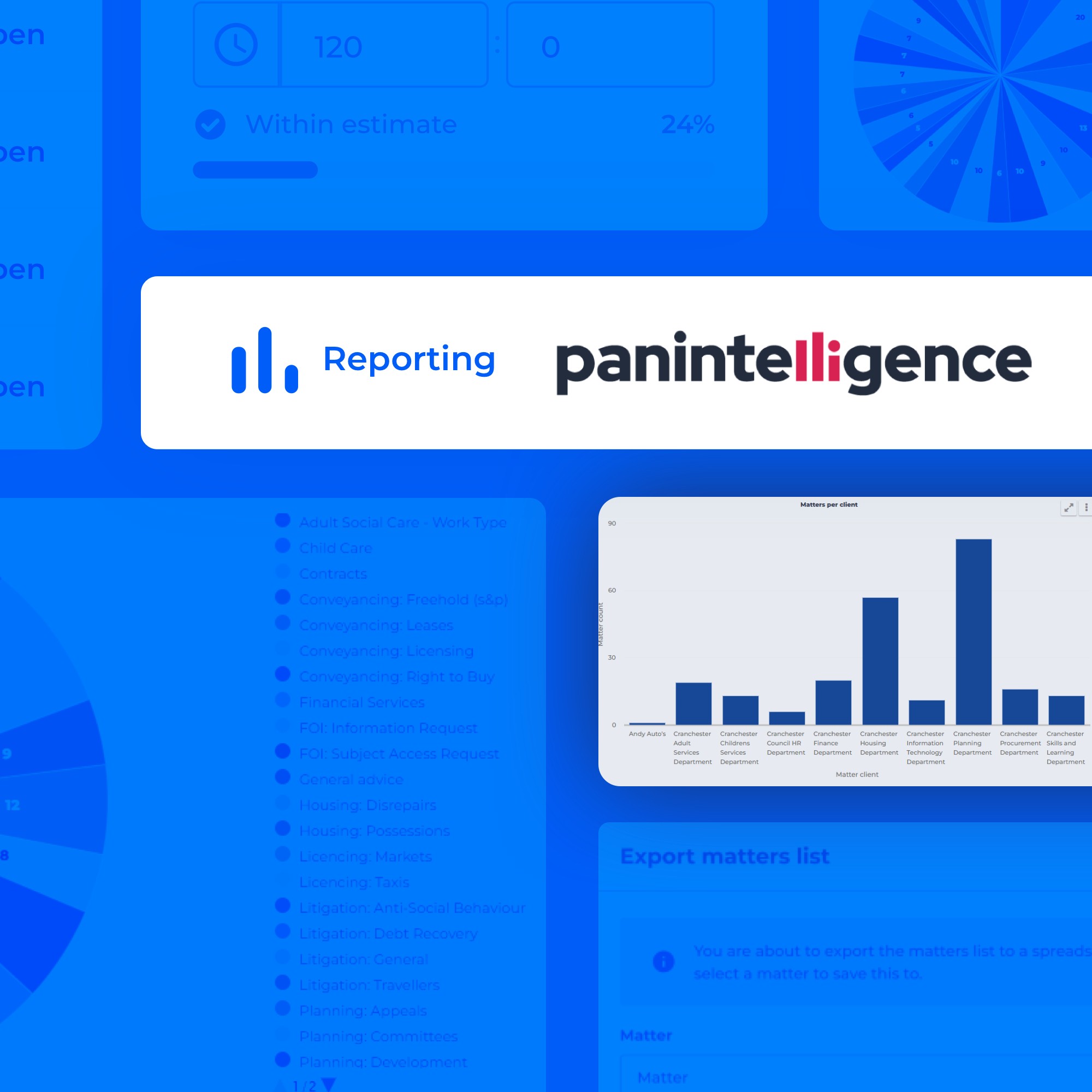
Providing access to case data for insight and decision-making is equally important. Rather than rebuilding reporting capabilities internally, we chose to integrate with specialist business intelligence tools such as Panintelligence.
This allows us to focus development resources on case management, while enabling organisations to analyse case data in ways that support operational oversight, compliance, and strategic decision-making.
Iken can view and report on data quickly within the system. However, the deeper insight offered by a dedicated business intelligence platform broadens its utility and value. As our product strategy increasingly enables user-driven customisation (allowing the system to adapt to evolving organisational needs) integrating with a complementary BI tool removes reliance on a single provider to build dashboards, charts, and reports on behalf of customers.
The architecture of this data, its scope, and ensuring it is accessible reliably and securely are critical for connecting data beyond the case file and supporting both tactical and strategic objectives. Considerations such as data warehousing, lakes, and lakehousing extend this further, opening case management data for broader business use. We are keen to explore these discussions further and understand the wider use cases for Iken’s data with the organisations we work with.

Connecting Tools
Specialist Case Integrations
While generalist integrations, such as those connecting to productivity suites, support most case contexts, specialist integrations address more industry-, case-, or workflow-specific requirements.
Electronic bundling is an obvious example. Across legal, HR, and FOI work, the ability to collate, index, and present relevant case files efficiently can save many hours of effort.
Whilst we brought the first e-bundling software designed for local government teams to market nearly 20 years ago, our SaaS strategy has focused on case management itself. As a result, we partnered with Bundledocs, who use Iken’s API to enable seamless document bundling directly from the case file.
Connecting case management and bundling tools is a logical step. Allowing interoperability between these systems adds significant value wherever document collation is required.
HMCTS’s Common Platform is another example of a case-type-specific integration. As its scope expands, including the standardisation of certain non-police prosecution processes, enabling integration from case management systems via API supports a more connected ecosystem. Setting up a case, submitting data and documentation, and keeping systems synchronised helps preserve a single source of truth. Without integration, duplication and cross-referencing become time-consuming and risk-prone. Planned integrations along these lines aim to reduce that burden.
These specialist integrations provide tangible day-to-day value, improving productivity, accuracy, and trust at critical stages of casework, and continue to feature prominently on our product roadmap.
The New(er) Kid on the Block
It would be remiss of us not to mention integrations with AI tools.
The pace at which AI-enabled tools are evolving, and the ways in which they are accessed within workflows, is one of the fastest-moving developments in modern software. Knowledge workers increasingly encounter AI functionality embedded within productivity suites and content-generation tools.
What, then, is the role of AI within case management?
As our AI Technical Lead, Ian Clarke, wrote in January following a development sprint:
“If we are to delegate the model layer of a product to one of the big AI labs and merely call an API when we require inference, then what is left for Iken to do in the app layer? The answer is context engineering.”
Providing a framework through which AI tools can access structured case data, and do so safely and appropriately, ensures we future-proof our product while opening it to workflow augmentation. Given the speed at which useful and novel AI applications are emerging, this presents significant opportunity for a product-focused company operating within a case management ecosystem.
Conclusion
Returning to the original remit of case management, the real value lies in connecting people, data, and tools seamlessly across the case lifecycle.
Integrations enable us to deliver against this broad remit, supporting day-to-day casework while also providing the clarity and confidence organisations need to manage their services effectively. The complexity and overlap between these areas is one of the reasons our product team finds this work so engaging.
Requirements continue to evolve, and our product roadmap includes an increasing number of planned integrations. The ethos of build or connect remains central to our decision-making. Whilst we cannot directly integrate with every solution, Iken’s open API, with growing breadth as requirements develop, enables us and our clients to continue expanding the ecosystem.
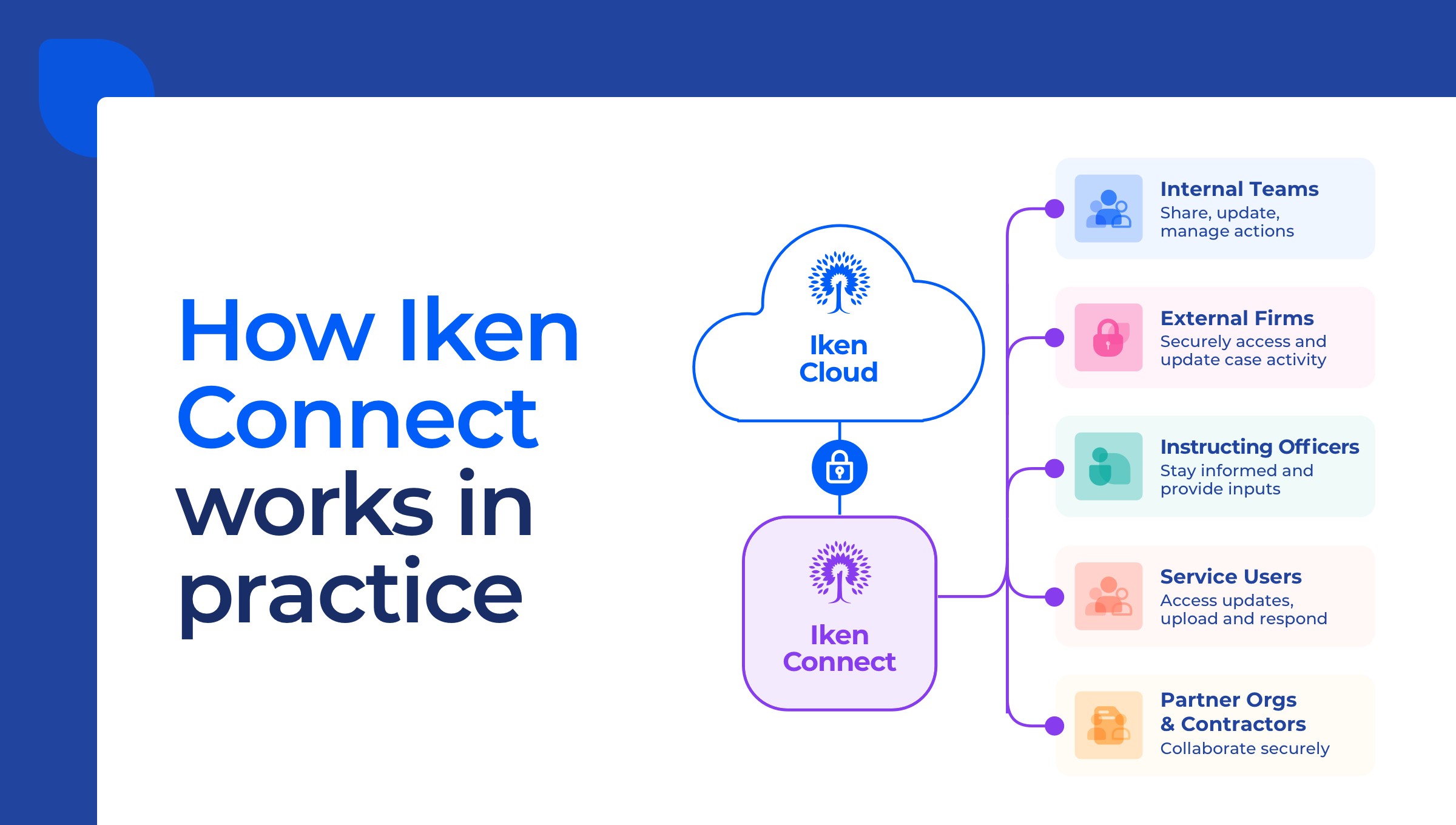
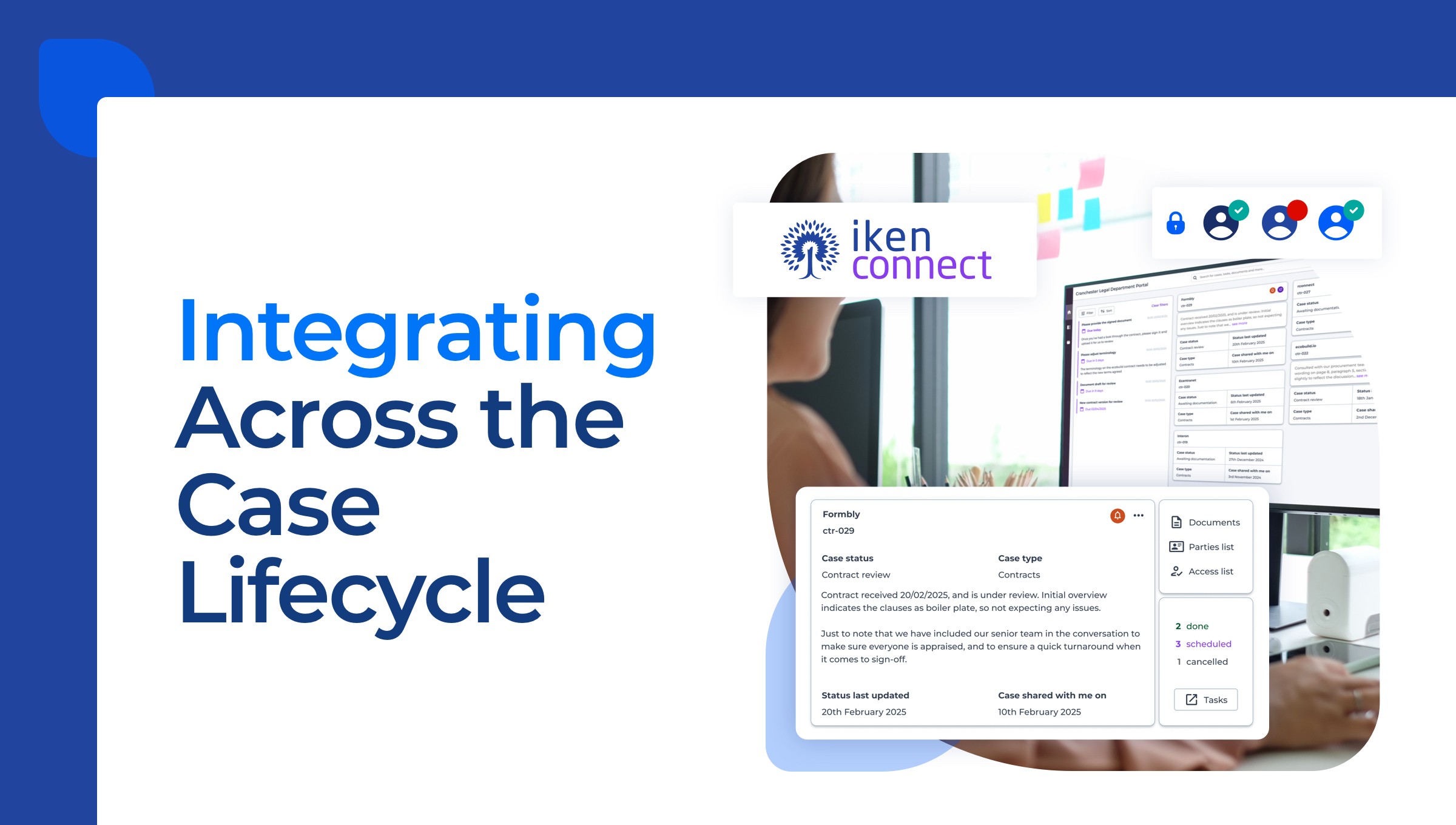
Our upcoming product, Iken Connect, represents an example of where we build. Providing a client-facing, self-service portal for secure case data access reduces back-and-forth communication and extends the reach of case management. This strengthens collaboration across all three areas discussed here, and we will explore this in more detail soon.
As development tools and technical literacy continue to become more accessible, connecting people, data, and tools will only become quicker and more widespread. Designing that connectivity deliberately, rather than incidentally, remains central to how we approach case management.

Learn More
If you’d like to learn more about how Iken supports local authority legal and governance teams, get in touch or explore our latest case studies from councils across the UK.