Iken

Product

Solutions

Resources

Our Software

Support

18th March 2026

25th Nov 2025

4 min read

Reorganisation: The legal tech perspective

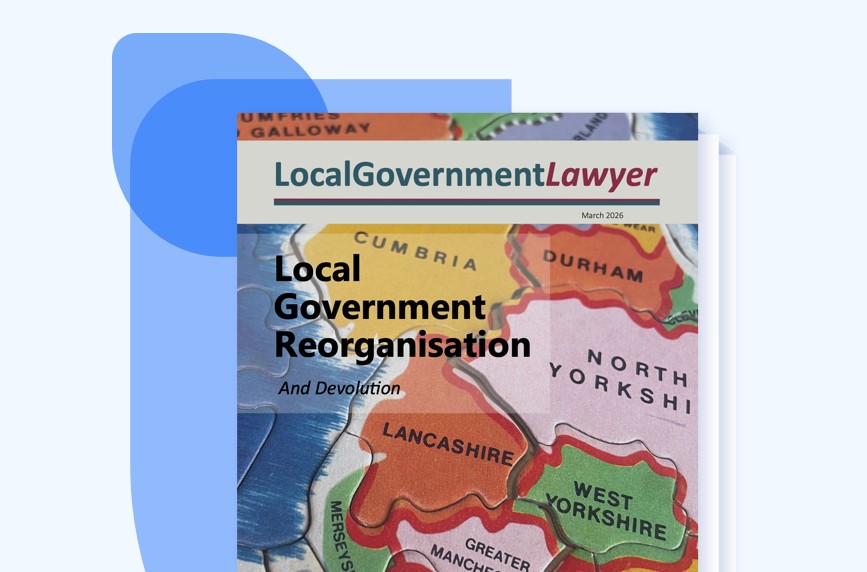
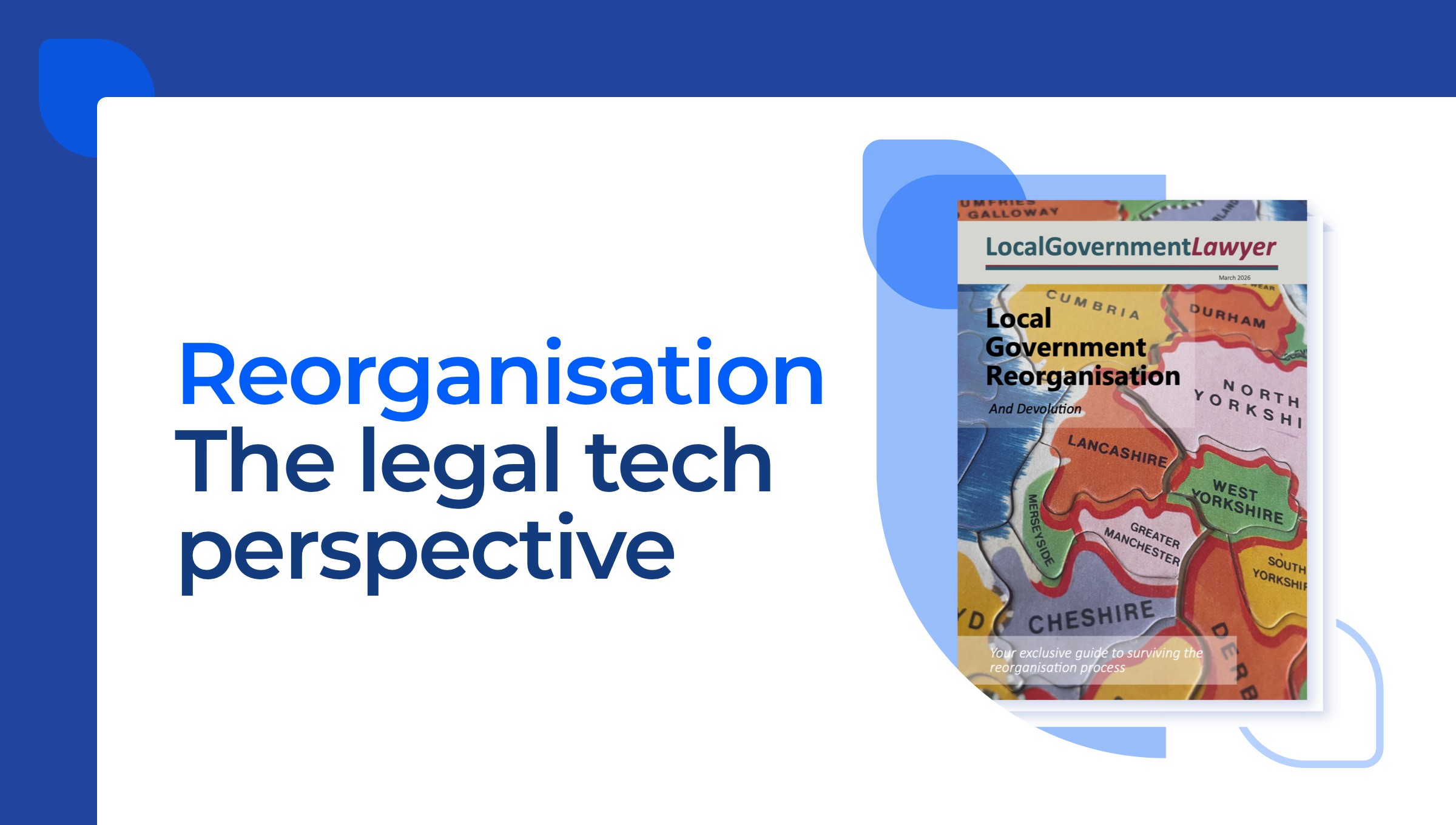
This article by Tanya Corsie was originally published in the Local Government Lawyer (LGR) Reorganisation 2026 guide.

Tanya Corsie

CEO
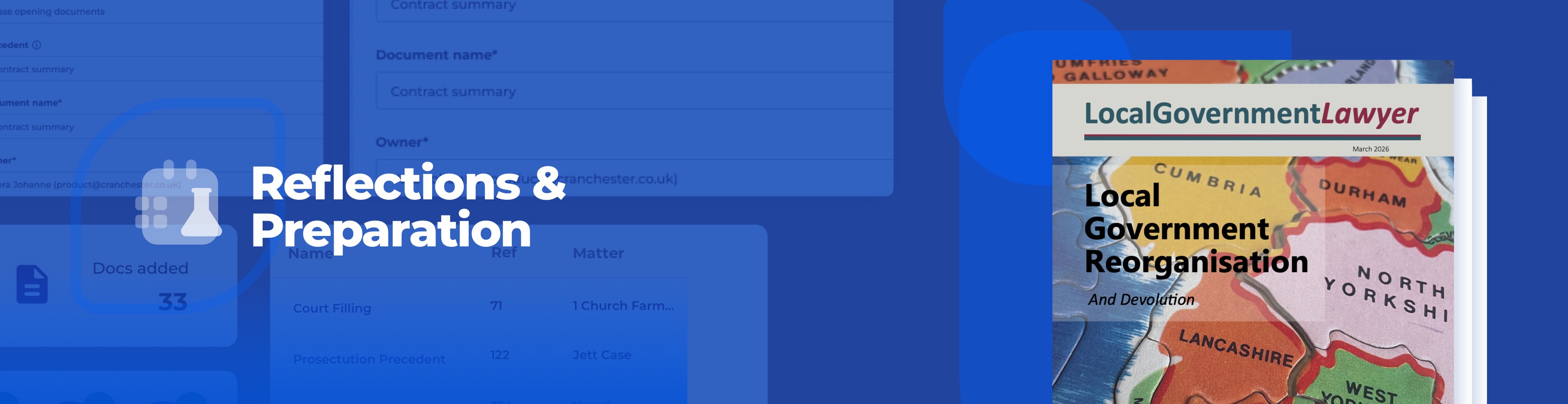
Iken examines the practical impact of local government reorganisation on legal teams, arguing that alongside governance and workforce change, technology will be critical to a smooth transition.

Why technology gaps surface first in legal teams

The technology challenge within local government is significant, with IT teams struggling to connect disjointed systems and manage complex and long-term supply chains. Numerous stress points surfaced during the early response to Covid-19 where there were too few laptops, completely insufficient network bandwidths to cope with a remote workforce and limited software solutions available via remote access.

In recent years, many local authorities have rebuilt their IT from the bottom up and have adopted a cloud-first approach to procuring software such as case management, e-bundling, workflows and time recording.

Across the sector, conversations between legal teams and IT colleagues consistently surface the same core requirements:

• Single sign-on / multi-factor authentication
• Use of latest encryption protocols
• Audit trails
• Privacy and data sovereignty considerations



Accessibility

Accessibility

Ease of use. Responsive design. Adherence to Web Content Accessibility Guidelines (WCAG)

Ease of use. Responsive design. Adherence to Web Content Accessibility Guidelines (WCAG)

Flexible

Flexible

Device agnostic. Works equally well for remote as well as on site workers

Device agnostic. Works equally well for remote as well as on site workers

Affordable

Affordable

Transparent pricing model. Benefits of scale

Transparent pricing model. Benefits of scale

Regular product and security updates

Regular product and security updates

Configurable but not bespoke. Automatic updates. Sector specific product roadmap

Configurable but not bespoke. Automatic updates. Sector specific product roadmap

Connected

Connected

Utilises infrastructure or tools already in use throughout the authority. Ability to interact with other tools. Applies to more than one department

Utilises infrastructure or tools already in use throughout the authority. Ability to interact with other tools. Applies to more than one department

There is also more for Senior Information Risk Owners (SIROs) and Information Security Officers to worry about, with high profile ransomware and cyber-attacks on the increase. Legacy solutions and unsupported systems and infrastructure are taking time and significant budget to replace, whilst human error remains one of the most significant security threats. Developing robust policies, well planned infrastructure and system architecture, as well as implementing quality software solutions, provide local authorities with the foundations for improving service delivery, connecting disjointed services and identifying nuanced and detailed information. These benefits can then be leveraged to create better informed and/or expedited decision making, improving transparency, reporting and communications.

Why local government lawyers are already practising legal operations

However, there is good news for local government legal teams – you’re already sophisticated technology users, and for once, it’s even better news for those of us who have been around the block a few times - all of those years perfecting your dictation skills means that you are primed and ready to unleash yourself into hands free document drafting via Office 365 and Copilot or your equivalent. Furthermore, you already have the concise and optimised wherewithal to refine research prompts with your AI tool(s) of choice.

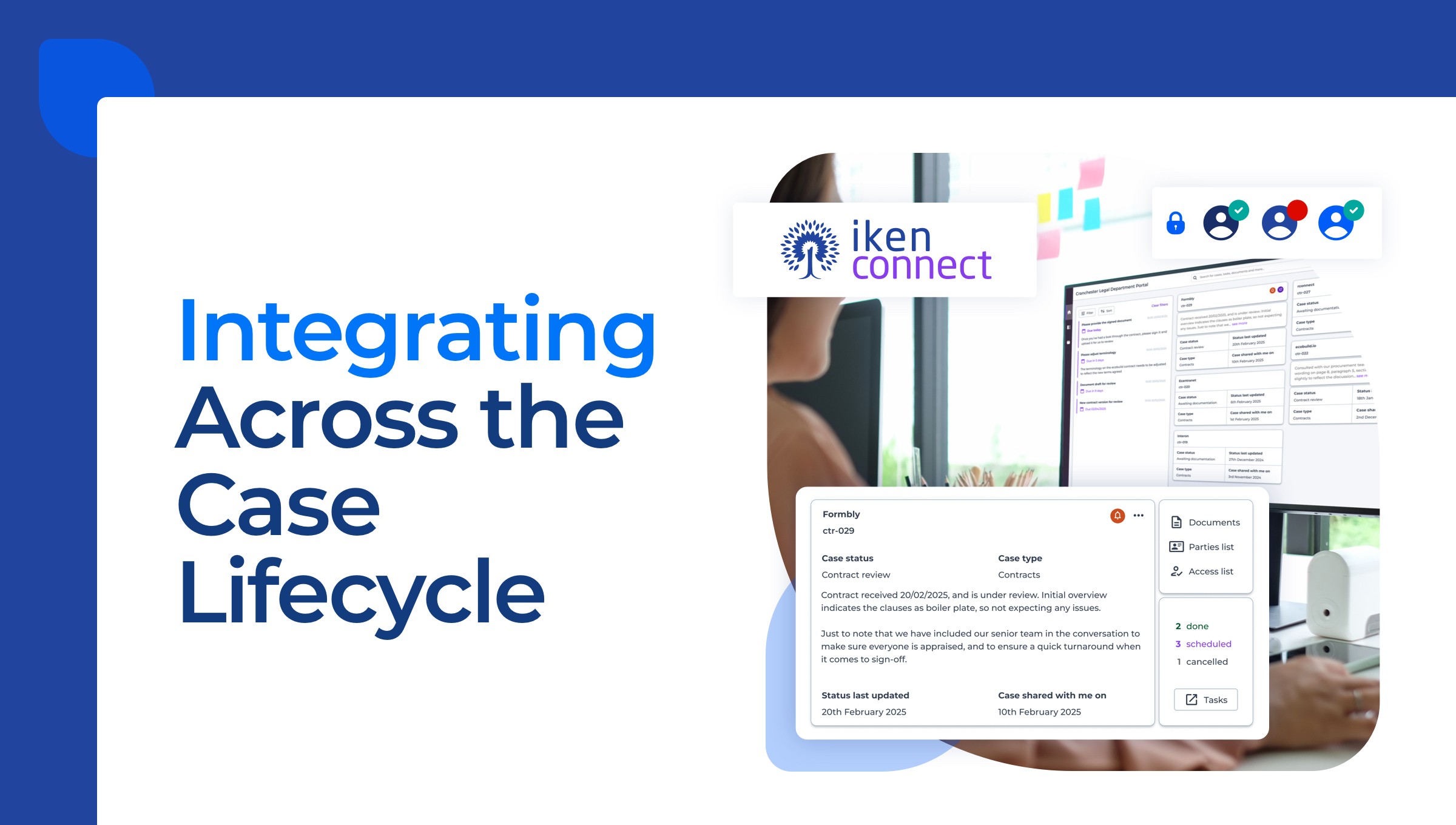
Case management remains the epicentre of your legal technology ecosystem, incorporating your email & document management, matter management and access controls, configurable workflows, monitoring & reporting and time recording & billing. However, there are a variety of additional technologies that legal teams have been using for a number of years: law libraries and forms; electronic court bundling; portals; licensing systems; complaints systems; planning and land registry systems and many more specialist tools that your teams access on a daily basis.

Without realising how you got there, legal teams are often at the forefront of technological and organisational change and can utilise those learned experiences and lead the charge on LGR:

You are experts at implementing and amending complex processes and utilising workflows to maintain consistency during high volume and/ or high-risk work

You provide high quality information/ data on organisational risk

You are consummate professionals at creating new policies and evaluating risk

You work to conflicting deadlines and can prioritise accordingly

You understand better than most, how much work your team can deliver and how much additional resource you need if the volume of work increases – you have the data to back that up (thank you time recording!)

Training and continuous learning is an embedded trait

You use the best tools at your disposal to manage your work

“Without always realising how they got there, legal teams are often at the forefront of technological and organisational change. Those experiences mean they are well placed to lead the charge during local government reorganisation.”

Tanya Corsie

CEO

AI governance: Moving beyond ‘policy, purpose, pilot’

There’s a lot of noise about the use of AI in local authorities and some good progress is being made on citizen-facing services in particular. However, the wider rollout of organisation-wide tools such as Copilot or ChatGPT remains sporadic at best - Policy | Purpose | Pilot is the most common approach across the sector. Many authorities are finding that this can limit practical adoption within legal teams. Something we explore in more detail in our recent analysis of AI governance in the public sector.

The wider industry trend of legal ops would arguably be a more implementable approach, where experts (internal or external) utilise APIs to link disparate but compatible systems together and push and pull relevant data to and from the correct source – this would minimise duplication of data entry and help organisations nudge towards that holy grail – that long-sought ‘single source of truth’ for matters, risk and organisational reporting. This is the discipline which could then create connected systems, streamline services and improve data visualisation and reporting – and would be of itself a game changer for local authorities.

Enough of the theory, it’s time to eat the frog

So now that we’ve established that local government lawyers embrace technology, LGR could lead to one of these technology driven challenges for local authority legal teams:

1. Implement a case management system from scratch, migrating data from multiple legal teams

2. Migrating data from other authorities into your existing system

3. Migrating legacy data into an archive

“The migration from South Northants was really easy … considering the large number of files and documents, the downtime really wasn’t long … We can set up our own users now, which means we don’t have to involve IT at all. That’s been a huge help.”

“The migration from South Northants was really easy … considering the large number of files and documents, the downtime really wasn’t long … We can set up our own users now, which means we don’t have to involve IT at all. That’s been a huge help.”

Judy Goodman

West Northamptonshire Council

The data decisions that shape reorganisation outcomes

Experience across multiple reorganisation programmes shows that there are several critical data decisions that need to be made upfront (client structure, naming conventions and reporting outputs need to be considered):

Matter naming conventions and file referencing protocols – this is especially crucial if different approaches have been used. There is often a de-duplication exercise to ensure that there aren’t any conflicts

Matter/case types – alignment and/or consolidation to facilitate

Time recording activities

Rates tables (internal and external) - to reflect new working arrangements • Contacts and parties

Users, teams and the associated access controls

Retention guidelines (archiving and destruction) – do they need to change to adhere to changes in legislation/ constitution/policy

Templates and precedents

Open | Closed | Archived cases and documents, workflow data, time records and billing information

Workflows and processes – were these established because of constraints on legacy systems and how best to consolidate for upmost effectiveness

Top tips

If you have the luxury of implementing a new system, set it up to optimise your workstreams and reporting now, don’t focus on the past, it will cost you dearly.

Think about what you need to migrate across into your new system – we usually advise authorities to only bring Open and Closed data and documents as standard – your archived data can be stored in a less interactive (more cost effective) state.

One of the toughest implementation decisions relates to historic user data as this is held at matter, document, time and charges level – your supplier’s data migration experts can guide you through this minefield. (Most authorities take current users only and historic team members are effectively anonymised).

Data migration is a crucial aspect of implementing a new case management system, but here are some other considerations:

Change management and communication with incumbent and new team members is crucial – a consultancy period ahead of the implementation is advisable – allow challenge and innovation. Creating an internal project team is a good way to keep momentum going and typically attracts greater buy-in from all users.

Consistency is crucial – it will take time for people to unlearn the old way of working and form new habits – stay focused, embed good practice, celebrate small wins. Some of our clients create an internal MS Teams channel as part of the Go Live process to help share good practice, provide structure and guidance and resolve smaller teething issues.

These types of project involve three main entities: your Legal Team | your IT Team | your Case Management Provider – all three groups must work together to ensure success. It’s common for a project manager to be present from IT and one from your case management supplier but all too often, the legal team’s representative is trying to project manage a complex implementation on top of their day job, which doesn’t set them up for success.

Why shared learning determines the success of reorganisation

The best part about LGR is that many of you have been through this before – leverage your network, share best practice and forewarn your peers of the pitfalls and cliff edges you’ve experienced previously.

Work with suppliers and partners who can support and advise you, and most importantly engage with your team, including them in decisions on how best to support your organisational goals and objectives.

Here at Iken, we’ve been working closely with our clients over the last 20 years to help them respond to widespread change and the technology challenges these far-reaching decisions entail.

LGR will of course be transformative and complex for those authorities in the midst of the furore and will take creativity, compassion and collaboration from leaders and their change-makers.

Circling back to those three pillars of Governance, People and Technology – local government lawyers provide the essential framework to navigate through what lies ahead. Technology that works with local government lawyers, intuitive, secure and designed around how they actually work, will help drive those changes and free lawyers to focus on strategy, governance and good practice – follow us, reach out directly or connect with us if you need to talk through any major technology conundrum.

Technology and lawyering go hand in hand – good technology enables great work. Knowledge is power.

Learn More 

If you’d like to learn more about how Iken supports local authority legal and governance teams, get in touch or explore our latest case studies from councils across the UK.
© 2025 Iken Business Ltd. First Floor, PS21, 21 Prince Street, Bristol, BS1 4PH, UK
Registered in England & Wales | Company Registration Number:- 2776536 | VAT Registration Number: GB 609526041

© 2025 Iken Business Ltd. First Floor, PS21, 21 Prince Street, Bristol, BS1 4PH, UK
Registered in England & Wales | Company Registration Number:- 2776536 | VAT Registration Number: GB 609526041

© 2025 Iken Business Ltd. First Floor, PS21, 21 Prince Street, Bristol, BS1 4PH, UK
Registered in England & Wales | Company Registration Number:- 2776536 | VAT Registration Number: GB 609526041